Two Bitcoin Mining Pools Left the Market in July for Opposite Reasons
Published 14 days ago • 4 min read
SBI Crypto stopped accepting shares on 30 July and closed its pool the following day, ending a five-year run at roughly 2.5% of global hashrate. Two weeks earlier, Poolin filed for Chapter 11 in New Jersey owing about $173 million. However, these are not two versions of the same story. One is a solvent parent moving capital into a business it likes better. The other is a court finally closing a file that has been open since September 2022. What they share is the part mid-tier pool operators should be reading closely.
One Pool Walked Out and One Was Carried
What SBI and Poolin Actually Have in Common
Why 28.8 Exahash Barely Moves the Network
Nobody Is Adding Hashrate Anymore
A Pool Needs More Than a Payout Model 🔒- Premium Insights
The Pools Most Likely to Go Next🔒- Premium Insights
FBOX’s 1.25MW and 10MW AI data center solutions combine direct-to-chip liquid cooling with hybrid air-side cooling systems to meet the thermal demands of modern AI and HPC workloads. Designed for rack densities exceeding 150kW, FBOX delivers efficient, reliable cooling infrastructure built for high-density compute environments.
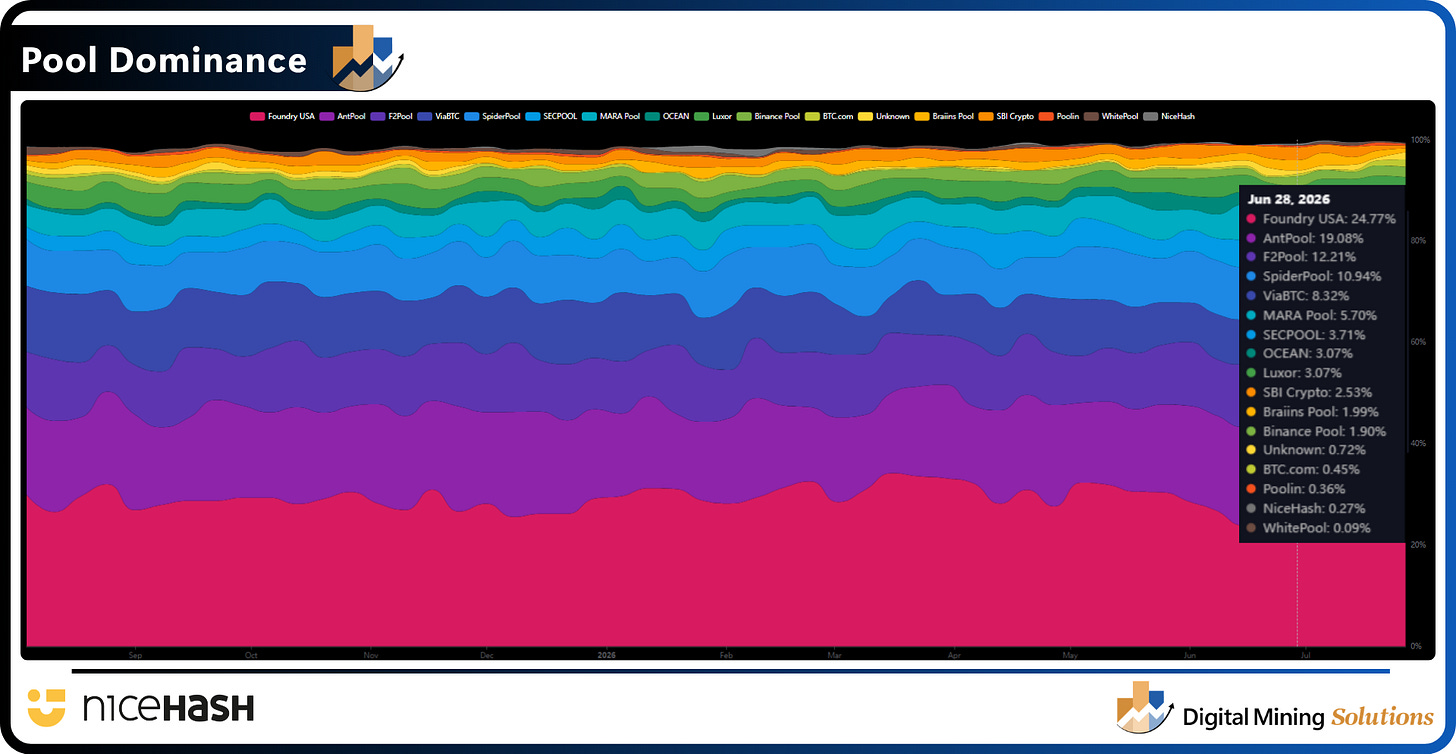
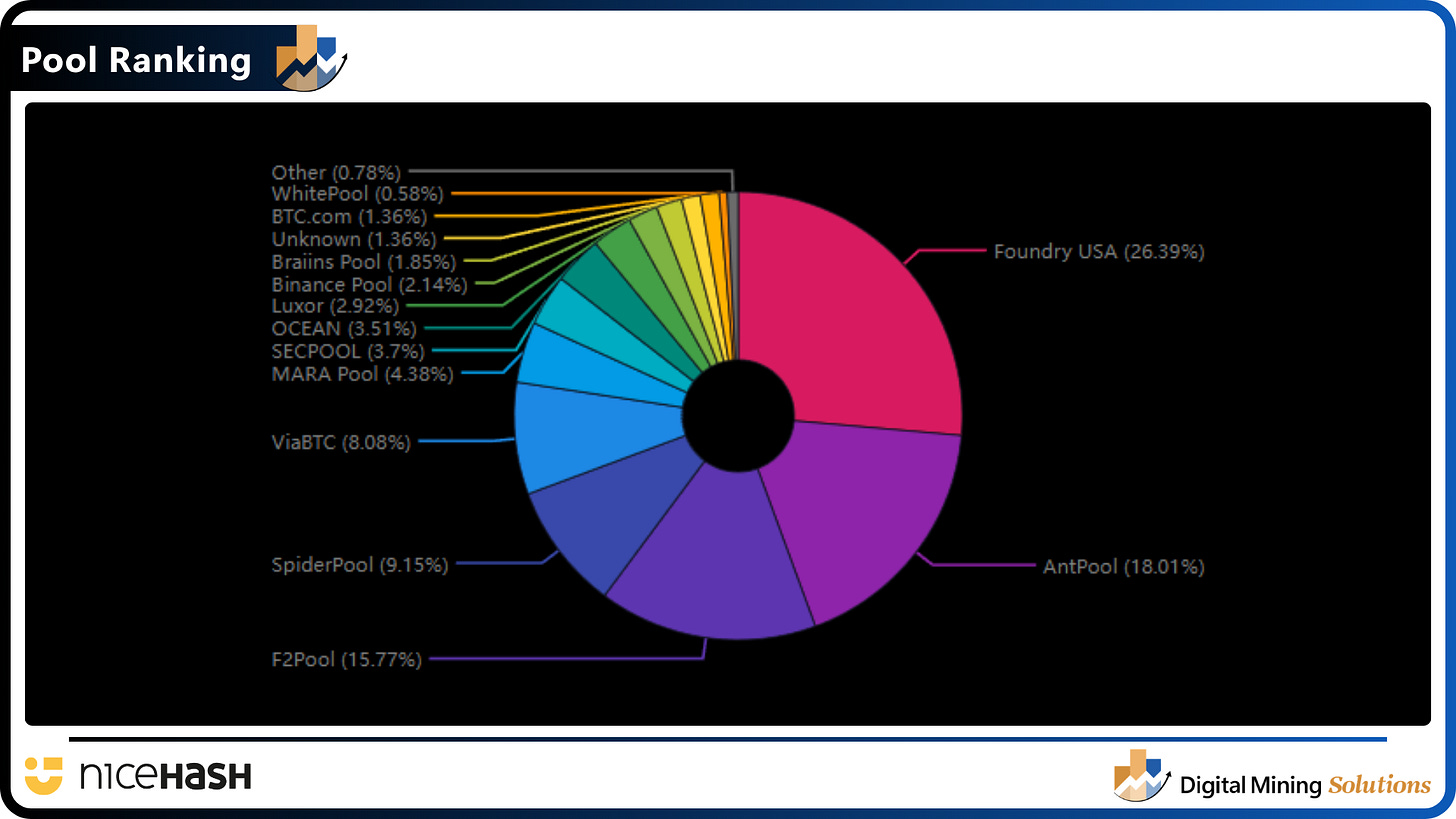
SBI Crypto announced on 1 July that it would end pool operations on 31 July, giving miners a 30-day notice and no stated rationale. The pool launched in March 2021 and ranked 10th globally a few days before they announced their closure, with roughly 25.2 EH/s and about 2.53% of network. The parent company’s direction is not ambiguous. SBI Holdings agreed to take full control of exchange Bitbank in a ¥46.7 billion ($289 million) deal and is backing the JPYSC yen stablecoin alongside Ripple’s RLUSD rollout in Japan.
Source: Mempool.space
Poolin’s filing is a different document entirely. The Singapore-based firm filed Chapter 11 in New Jersey on 22 July alongside US affiliates Lonestar Dream and Lonestar Taproot, with roughly $173 million in debt and a $52 million bid from Thor CALAP LLC for two West Texas sites that represent most of what is left.
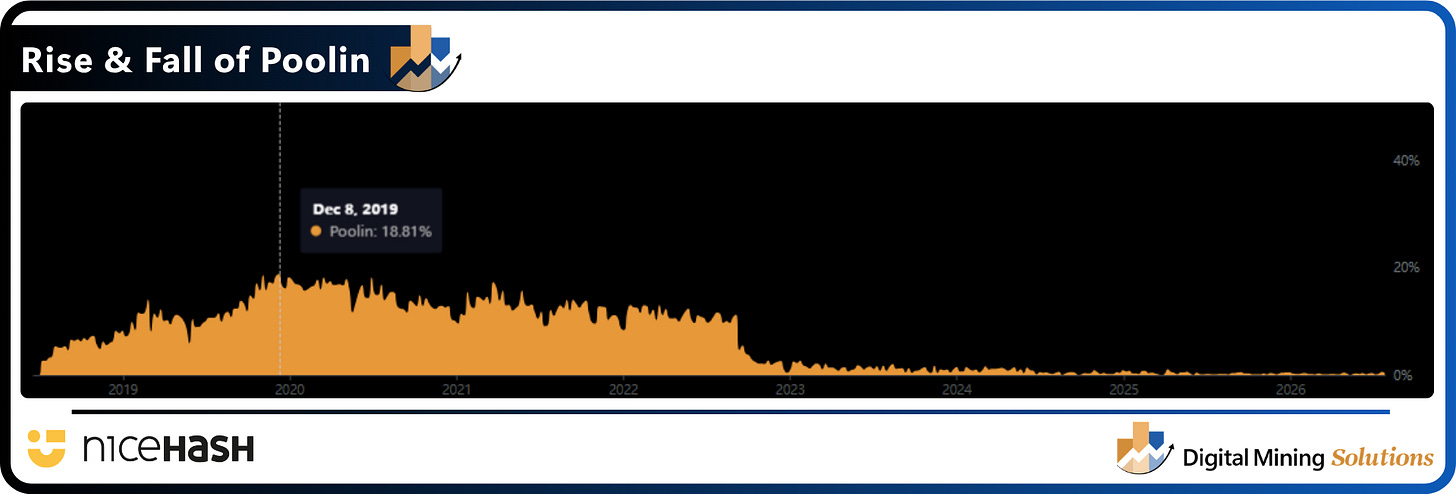
Its share of global hashrate peaked near 19% in 2019, ranking as the number one pool at times. However, Poolin's wallet arm ran out of liquidity in September 2022, suspended withdrawals, and issued roughly $163.7 million in IOU tokens to about 11,700 users instead of paying them. Miners did not want to leave unpaid balances with a pool that has stopped paying, so hashrate left almost immediately and never returned.
Source: Mempool.space
What SBI and Poolin Actually Have in Common
The differences are obvious. SBI exited solvent, on schedule, with a live customer base and recommended alternatives. Poolin’s customers have been waiting since September 2022, when Poolin Wallet suspended withdrawals and issued the IOU tokens to about 11,700 users. That is 46 months of waiting, only to end up near the back of the line in bankruptcy. The company owes about $173 million, and its main asset has drawn a bid of just $52 million.
The commonality is more useful than the contrast. Both were mid-tier FPPS pools operating a business whose fee income scales directly with hashprice. Both belonged to parents with better uses for the capital, SBI into regulated exchange and stablecoin infrastructure, Poolin into a Texas buildout that stalled on grid connection approvals.
Why 28.8 Exahash Barely Moves the Network
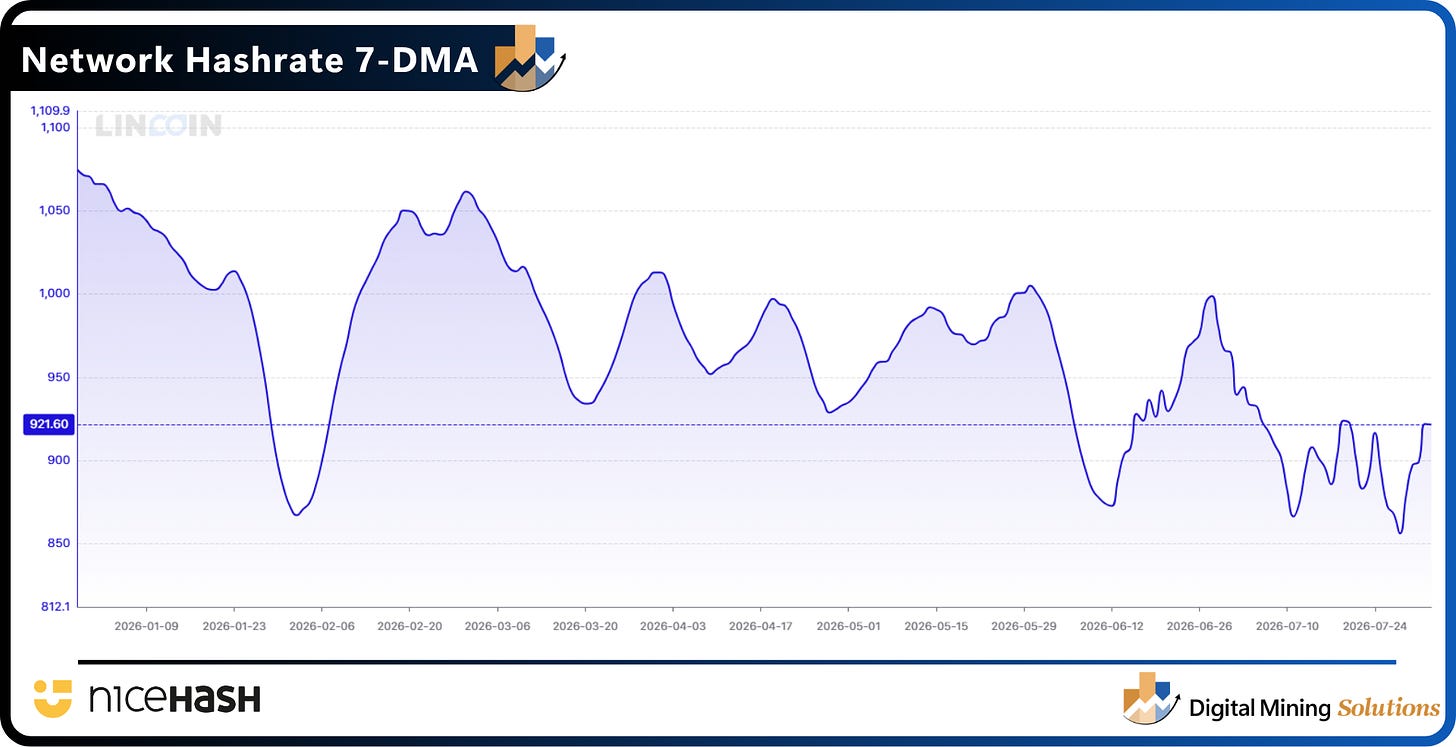
The 2.53% of network of SBI and 0.36% of Poolin on a network running at 998 EH/s represents 28.8 EH/s. This is nothing alarming for the network security as we have witnessed multiple +30 EH/s contractions in 2026. The difficulty algorithm absorbs that inside a single epoch and most of it never left the network anyway, since most miners switched pools rather than switching off.
Poolin’s network impact is near zero as it was priced in four years ago. But when the tenth-largest pool closes and its book is explicitly routed toward a handful of alternatives, the pool concentration might increase. That is a redistribution worth tracking.
Source: Mempool.space
Nobody Is Adding Hashrate Anymore
Here is the structural change underneath both stories. Network hashrate fell 13.6% year-to-date, from 1,066 EH/s on 1 January to 921 EH/s by 3 August. It was the first time in five years the metric closed a half-year below where it opened. The first-quarter of this year was already the first Q1 decline since 2020, following five consecutive years of double-digit growth.
Source: Lincoin Lens
Hashprice explains it. Around $60/PH/day in mid-2025, going sub $30/PH/day on multiple occasions in 2026 and currently $31.5/PH/day. Luxor’s forward curve is also pricing an average of about $30 over the following six months. Nothing in that curve says relief.
Now apply that to pool economics. From 2021 through 2025, network hashrate grew every year, so new machines were constantly coming online and a pool could win customers nobody else had signed up yet. Holding flat market share still grew its book 30% to 100% a year. Network growth did the selling.
In 2026 that engine is gone. With the network shrinking, there are few new machines to sign up, so flat share now means a shrinking book. The only real way a pool grows is by convincing a miner to unplug from a competitor and plug into it instead. One pool’s gain is another pool’s loss.
That is a different business. Pool growth has shifted from acquisition to displacement, a zero-sum fight over the same shrinking set of miners. It is the environment where fee compression starts, where migration incentives get offered, and where pool operators with a single revenue line find out how thin it is.
🔒 The following section is for premium subscribers. The analysis above is free. What follows breaks down why a pool needs more than a payout model, which pools are structurally exposed by that, and the specific counterparty checks miners should be running on their pool this quarter.